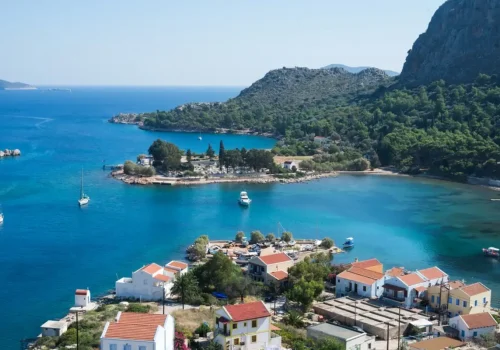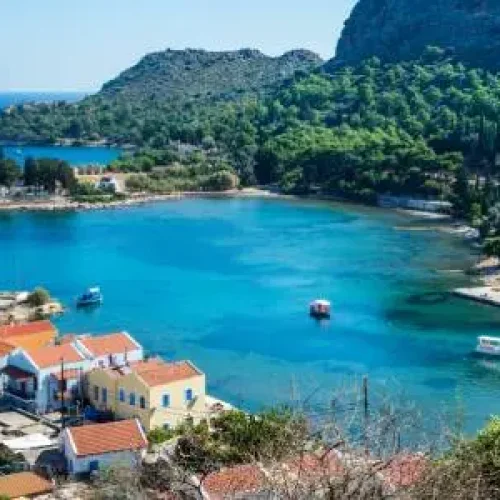
After the summer season, the limited number of permanent residents of Meis Island face the difficulties of winter and the livelihood challenges of the island’s elderly population.
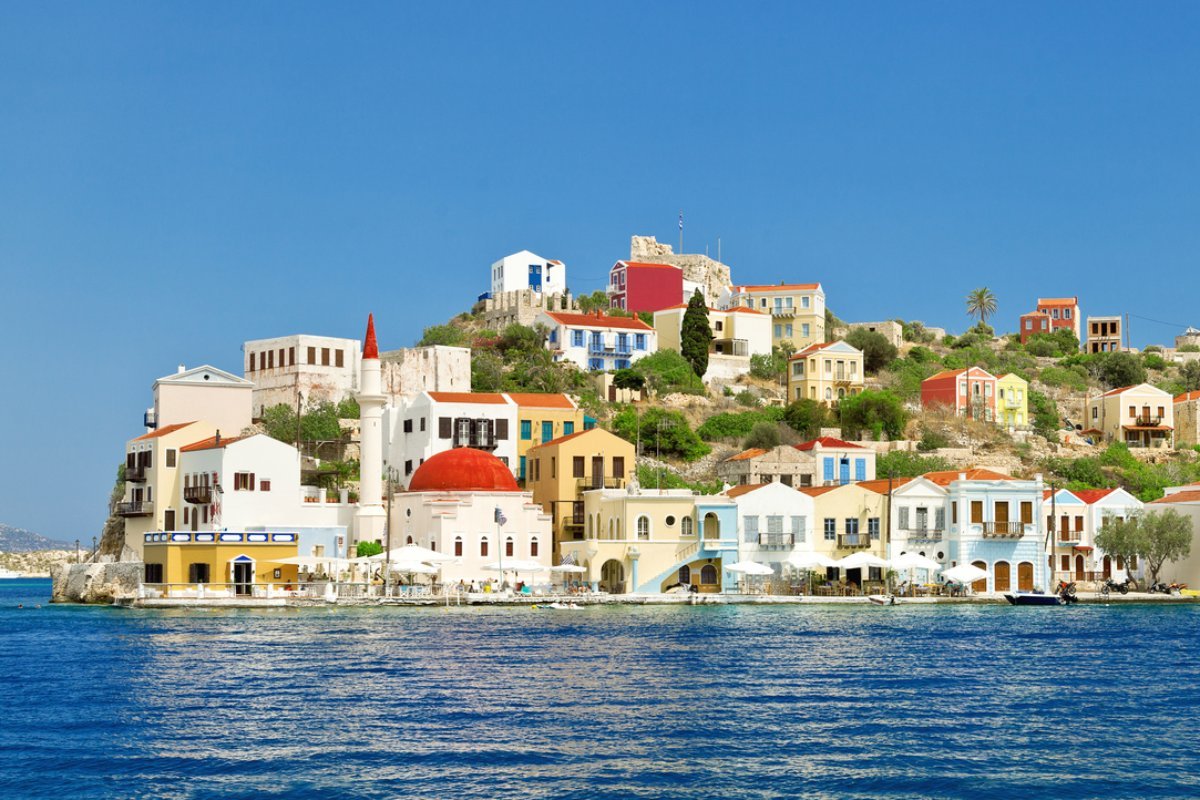
While visitors in the summer months easily surrender to the timeless beauty, peaceful atmosphere, local cuisine, and rich history of Meis Island, its few hundred permanent residents struggle with a harsh reality during winter.
For example, houses damaged by sea salt and humidity must be completely repainted twice a year.
The island’s mayor, Nikos Asvestis, states that the main problem is the shortage of personnel on the island, emphasizing deficiencies ranging from garbage collectors to, most importantly, doctors.
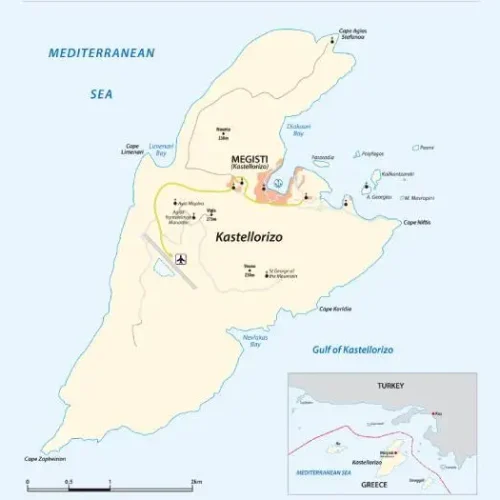
During winter, ferry connections to Rhodes, the nearest major island to Meis, are very limited. According to local residents, many are forced to seek medical treatment in hospitals in Turkey, located across the Aegean. Severe weather conditions in winter can also halt both air and ferry traffic. At times, Greek military helicopters are called to transport patients from the island to hospitals.
“Giannis Nitis, a 65-year-old fisherman born on Meis Island, says, ‘The Greek state does not take care of us.’”
He explains that it has become very difficult to survive by fishing on the island. Nitis adds that the few remaining fishermen are turned back by Turkish Coast Guard boats when they cross into Turkish territorial waters.
“We elderly fishermen no longer clearly know where the Turkish maritime borders are, and it creates confusion. The species we once caught in abundance—such as octopus and red snapper—have disappeared. All we have left is the Symi shrimp. If that also disappears, all fishing boats will be pulled into the harbor and anchored,” he concludes.
Mayor; Nikos Asvestis
Nevertheless, despite having been exposed to many wars and conflicts throughout its long history, Meis Island continues to remain a unique and peaceful escape in the Mediterranean.
“Our island has a very long history. With its clean seas, the Blue Cave, and its hospitality, I can say it is a jewel of the Mediterranean,” he says. “And this is a frontline island; it should be supported and visited,” he concludes.